Aluminium Railing
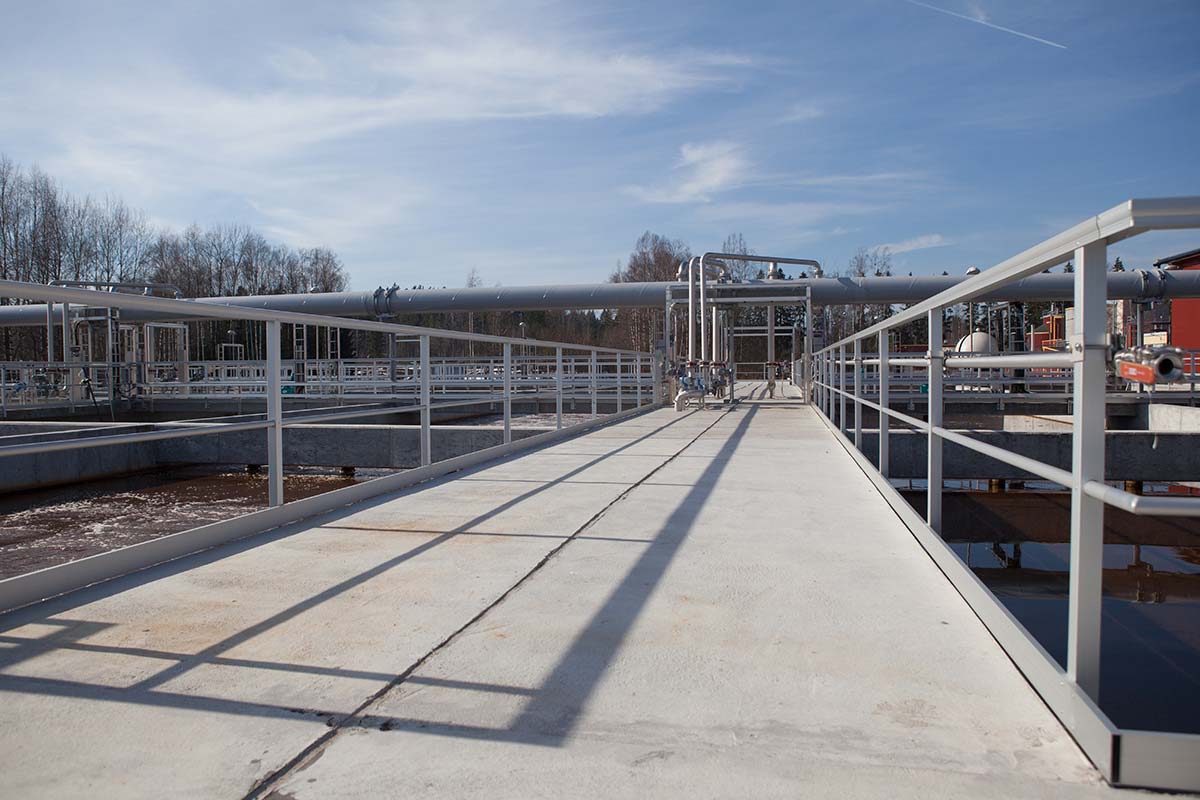
Typical applications for aluminium railings include water treatment plants and industrial maintenance platforms. Thanks to its corrosion and chemical resistance, anodised aluminium railing is ideal for protecting ports and wastewater basins and for guiding pedestrian traffic. All parts of the aluminium railing are made of natural anodised aluminium. The shape of the top rail makes it comfortable to hold, and thanks to the surface treatment the railing components withstand both mechanical and chemical wear well and are easy to care for. The railing system meets the requirements of standards EN 1991-1-1 and EN 14122-3.
Technical data
Specifications
Why choose this
Features
- Anodised aluminium does not rust or need painting
- Practically maintenance-free even in long-term use
- Standards EN 1991-1-1 and EN 14122-3
- Ergonomic top rail
- All components in standard dimensions, easy to customise
- Post fixing by bracket or cast-in plinth
- Anodising or RAL powder coating
Suitability
Applications
Aluminium railing for industrial sites
Aluminium railing is needed wherever people move close to machinery, equipment or fall hazards. Typical installations include industrial maintenance platforms and service walkways, basin edges at water treatment and wastewater plants, port quays and loading docks, and areas around production lines in industrial halls. The longevity of aluminium is especially valuable outdoors. The anodised surface needs no repainting for decades, and the material withstands mechanical wear, chemicals and humid marine climates without rusting. This makes the life-cycle cost of aluminium railing clearly lower than that of steel railing, which needs its surface treatment renewed regularly.
Safety standards for aluminium railing
The key framework for designing industrial aluminium railings is the standard EN ISO 14122, which covers permanent means of access to machinery, stairs and railings. The standard defines the minimum railing height, permitted openings and the load requirements for the structure, so that the railing withstands both static point loads and dynamic impact loads. Structural design also applies the loading standard EN 1991-1-1. A compliant railing also makes it easier to pass official inspections, as documented compliance can be demonstrated directly without a separate site-specific assessment. The aluminium railing system is compatible with steel floor and stair systems and can be fixed either to the floor surface with brackets or with a cast-in plinth.
Aluminium or steel railing, how to choose?
The choice of material starts from the operating environment and the total cost of ownership. Steel railing has a lower purchase price than aluminium, but outdoors or in chemically demanding spaces it needs its surface treatment renewed regularly. Aluminium railing costs more to buy but is practically maintenance-free. In normal use the anodised surface lasts the entire life cycle of the building without painting. Anodised aluminium withstands mechanical and chemical wear, so it also suits water treatment plants and other sites prone to corrosion. Indoors or under covered structures, steel can be a justified choice, especially if the appearance of the railing is not important.
Frequently asked questions
Aluminium Railing, FAQ
Which sites is aluminium railing suitable for?
Which standards does the aluminium railing comply with?
Does aluminium railing need maintenance?
How is aluminium railing fixed?
Contact us
Right for your site?
Tell us about your site and requirements, and we will specify the right solution and send you a quote.